



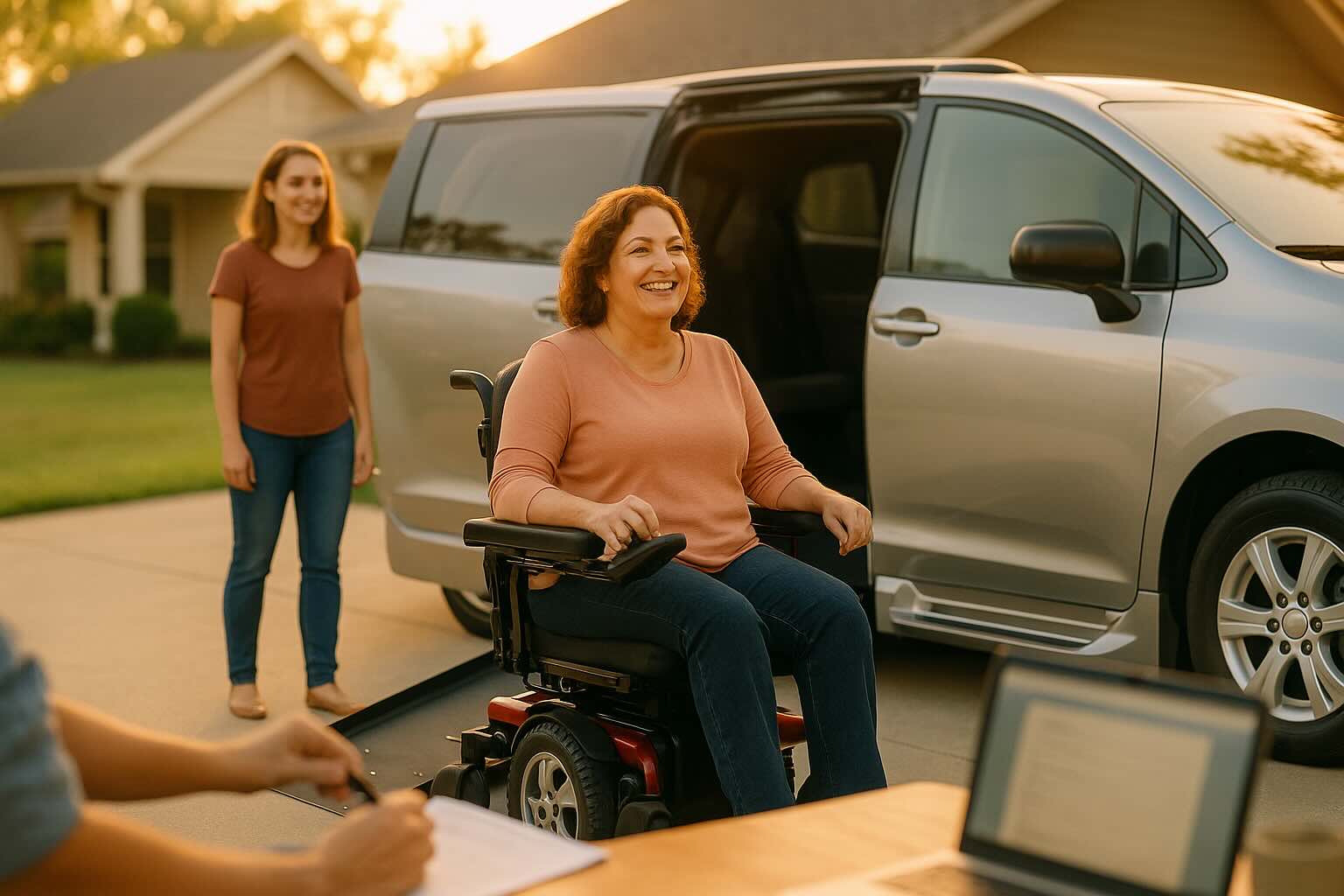
Making Wheelchair Vans Affordable
A wheelchair accessible van represents more than transportation. It is the key to independence, employment, medical appointments, and participation in everyday life. But with prices ranging from $50,000 to $80,000 or more, the cost can feel overwhelming.
The good news is that multiple funding sources exist, and they can be combined. Veterans may qualify for over $27,000 in VA benefits alone. Non-veterans can stack manufacturer rebates (like Stellantis DriveAbility’s up to $1,000 reimbursement), nonprofit grants, state vocational rehabilitation funding, and tax deductions to significantly reduce out-of-pocket costs.
Federal Programs
VA Automobile Allowance
2026 GRANT AMOUNT: $27,074.99
The VA Automobile Allowance is a grant to help veterans purchase a vehicle. This is the single largest grant available for wheelchair van funding.
Eligibility Requirements:
- Loss or permanent loss of use of one or both feet
- Loss or permanent loss of use of one or both hands
- Permanent decreased vision in both eyes (20/200 or less with glasses, or visual field defect reducing peripheral vision to 20 degrees or less)
KEY CHANGE with AUTO Act of 2023: Veterans can now apply every 10 years instead of the previous once-in-a-lifetime limit. Veterans who used the grant 30+ years ago are immediately eligible to reapply.
Important: You must receive VA approval BEFORE purchasing your vehicle. Submit VA Form 21-4502 through your local VA regional office. The timeline is typically 2 to 6 months for approval.
VA Adaptive Equipment Program
Separate from the automobile allowance, the VA Adaptive Equipment program covers wheelchair lifts, ramps, lowered floors, raised roofs, tie-down systems, and hand controls. This benefit can be used multiple times, covering up to 2 vehicles in a 4-year period. All adaptive equipment must be prescribed by a VA healthcare provider.
Medicaid Home and Community Based Services (HCBS)
Medicaid Home and Community Based Services (HCBS) waivers vary by state but can cover vehicle modifications. States with known coverage include Illinois, Michigan, Missouri, and New York. Contact your state Medicaid office for eligibility details.
State Vocational Rehabilitation Programs
Every state operates a Vocational Rehabilitation (VR) program that can fund vehicles or modifications when needed for employment. Search “[Your State] Vocational Rehabilitation” to find your local office.
Manufacturer Rebate Programs
Major vehicle manufacturers offer rebate programs that can put up to $1,000 back in your pocket after purchasing an accessible vehicle. These programs work alongside other funding sources, so you can combine manufacturer rebates with VA benefits, state programs, and nonprofit grants.
Stellantis DriveAbility Program
Stellantis offers up to $1,000 reimbursement for adaptive equipment installed on Chrysler, Dodge, Jeep, Ram, Fiat, and Alfa Romeo vehicles. The program features a comprehensive grants and funding locator to help you find additional financial assistance.
Program Details:
- Rebate Amount: Up to $1,000
- Eligible Brands: Chrysler, Dodge, Jeep, Ram, Fiat, Alfa Romeo
- Application Window: Within 60 days of adaptive equipment installation
- Equipment Installation Deadline: Within 6 months of vehicle purchase
- Can be combined with other funding sources: Yes
- Contact: (800) 255-9877
- Website: stellantisdriveability.com
Other Manufacturer Programs
| Manufacturer | Rebate Amount | Application Window | Details |
|---|---|---|---|
| Stellantis DriveAbility | Up to $1,000 | 60 days after installation | Chrysler, Dodge, Jeep, Ram |
| Toyota Mobility | Up to $1,000 | 12 months after purchase | Toyota vehicles |
| GM Mobility | Up to $1,000 | 12 months after purchase | Chevrolet, GMC, Buick |
| Ford Mobility Motoring | Up to $1,000 | 12 months after purchase | Ford vehicles |
| Honda Mobility | Up to $1,000 | 12 months after purchase | Honda vehicles |
| Nissan Mobility Assist | Up to $1,000 | 1 year after purchase | Nissan vehicles |
Pro Tip: Contact Rollx Vans to learn which manufacturer rebates apply to your chosen vehicle and how to submit your application. All rebates can be combined with other funding sources.
State Funding Programs
Beyond federal programs, many states offer additional resources. Below are programs for Minnesota, Illinois, and Wisconsin.
Minnesota
Positively Minnesota: Vocational rehabilitation grants for vehicles needed for employment.
STAR Program: Assistive technology resources and funding guidance.
EquipALife: Nonprofit providing assistive technology resources at (763) 479-8239.
Minnesota Veterans Tax Benefit: Veterans with 100% service-connected disability receive full vehicle sales tax exemption (6.5% savings). Modification parts and labor are also exempt from state sales tax.
Illinois
Division of Rehabilitation Services: Vocational rehabilitation funding. Illinois Department of Veterans Affairs: (312) 814-2460.
Shirley Ryan AbilityLab: Comprehensive rehabilitation at 1-800-354-REHAB.
Wisconsin
WisLoan Program: Low-interest loans for assistive technology.
Division of Vocational Rehabilitation: Employment-related vehicle assistance at dwd.wisconsin.gov/dvr/
Nonprofit Grant Organizations
Multiple nonprofit organizations provide grants ranging from $1,000 to full vehicle coverage.
| Organization | Amount | Details |
|---|---|---|
| SCORE | $1,000 to $7,500 | Spinal Cord Opportunities for Rehabilitation. (323) 655-8298 |
| Help Our Military Heroes | Full vehicle | For wounded veterans. Winding down in 2025. |
| Gary Sinise Foundation | Varies | R.I.S.E. Program for veterans and first responders. |
| Chive Charities | Varies | Veterans, military families, life-altering needs. |
| Semper Fi Fund | Varies | Combat wounded service members. |
| The Independence Fund | Varies | Veterans injured in line of duty. (888) 851-7996 |
| Special Kids Fund | Varies | Children and adults. Nationwide. |
| MS Foundation | Up to $1,000 | Brighter Tomorrow Grant. 1-800-225-6495 |
Additional Organizations: Bryon Riesch Paralysis Foundation, Christian Fund for the Disabled, Jett Foundation, Wheelchairs 4 Kids.
How to Apply for Wheelchair Van Grants

Follow this step-by-step process to maximize your chances of approval.
- Assess Your Needs
Work with a Certified Driver Rehabilitation Specialist to evaluate your mobility requirements. This evaluation is required for many funding programs. - Gather Documentation
Collect proof of disability, income verification, medical records, and (for veterans) DD-214 and VA disability rating letter. Download our free checklist below. - Apply to Multiple Programs Simultaneously
Do not wait for one program to respond before applying to others. Many programs have waitlists or quarterly funding cycles. - Get Your Vehicle Quote
Contact a qualified mobility dealer for an itemized quote. Many grant applications require this documentation. - Submit VA Applications First
VA benefits take the longest to process. Submit Form 21-4502 and Form 10-1394 early if eligible. - Coordinate Timing
Work with your mobility dealer to coordinate approvals so funding sources align with your purchase timeline. - Claim Manufacturer Rebates After Purchase
Submit rebate applications within the timeframe specified by each manufacturer. For Stellantis DriveAbility, this is 60 days after installation. Keep all receipts.
Expected Timelines
- VA Benefits: 2 to 6 months
- State VR: 1 to 4 months
- Nonprofit Grants: Varies by funding cycle
- Manufacturer Rebates: 6 to 8 weeks (Stellantis: processes within 60 days)
Crowdfunding with Benefits Protection
When grants and programs do not cover the full cost, crowdfunding can bridge the gap. However, if you receive Medicaid or SSDI benefits, traditional crowdfunding donations may count as income and affect your eligibility.
Help Hope Live is a 501(c)(3) nonprofit that protects your Medicaid and SSDI benefits because funds are administered by their organization rather than given directly to you. With 40+ years of experience, they provide fundraising coaching, custom campaign pages, and tax-deductible donations for contributors.
Tips for Success: Tell your story honestly. Use high-quality photos. Break down costs specifically. Start with friends and family first. Post updates weekly. Contact local media for human interest coverage.
Tax Deductions for Wheelchair Vans
Wheelchair accessibility modifications may qualify as medical expense deductions on Schedule A. The 7.5% AGI threshold applies, meaning only expenses exceeding 7.5% of your adjusted gross income are deductible. The medical mileage rate for 2026 is subject to annual IRS updates (2025 rate was $0.22 per mile). You can also claim deductions for dependent family members.
For detailed information, see our complete guide at: Tax Deductions for Wheelchair Vans.
Frequently Asked Questions
How much funding can I get for a wheelchair van?
Veterans can receive up to $27,074.99 through VA Automobile Allowance plus unlimited adaptive equipment grants. Non-veterans can combine manufacturer rebates up to $1,000 (like Stellantis DriveAbility), nonprofit grants of $1,000 to $7,500, and state vocational rehabilitation funding. Many families reduce their out-of-pocket costs by $10,000 to $30,000 or more by stacking multiple sources.
Can I combine multiple funding sources?
Yes, stacking funding sources is encouraged. Many successful applicants combine VA benefits, manufacturer rebates like Stellantis DriveAbility, state vocational rehabilitation, and nonprofit grants. The Stellantis program specifically states their reimbursement will not be affected by other funding sources.
How long does the funding process take?
VA benefits take 2 to 6 months. Manufacturer rebates like Stellantis DriveAbility process within 60 days after equipment installation. Nonprofit grants have quarterly application cycles. Plan 3 to 6 months when combining multiple sources.
Are wheelchair van modifications tax deductible?
Yes, modifications qualify as medical expense deductions on Schedule A when they exceed 7.5% of your adjusted gross income. Consult with a tax professional for your specific situation.
Get Started Today
By combining multiple funding sources and following a systematic application process, many families reduce their out-of-pocket costs by tens of thousands of dollars. Start with the larges